Salam and welcome! I'm Said, a Berber guide born in Imlil at the foot of Mount Toubkal. Every year we welcome many travelers from the United States, and they often ask us the same questions before their first trip. Here is everything I would tell a friend from America visiting Morocco: honest, practical and from the ground.
Before you fly
Before you fly
The practical part. Get these right and the rest is easy.
- 01
No visa needed for US citizens
Americans can visit Morocco without a visa for up to 90 days. You get a free entry stamp at the airport.
- 02
Check your passport: 6 months and a blank page
Your passport should be valid for at least six months after you arrive, with one blank page for the stamp. Airlines can refuse boarding if it isn't.
- 03
Fly nonstop if you can
Royal Air Maroc flies nonstop to Casablanca from New York (JFK), Washington (Dulles) and Miami, and announced a new Los Angeles route for 2026. Flights are about 7 hours from the East Coast. Many travelers also connect through Europe straight to Marrakech.
- 04
Enroll in STEP
Register your trip on the State Department's free Smart Traveler Enrollment Program (STEP) and check the latest travel advisory on travel.state.gov before you go.
- 05
Buy travel insurance
US health plans rarely cover you abroad. A simple travel policy with medical cover is worth it, especially if you plan to trek in the Atlas or ride camels.
- 06
Choose your season
March–May and September–November are ideal everywhere. Summer is hot in Marrakech and the Sahara but perfect in the mountains and on the coast. Winter brings sunny days, cold desert nights and snow on Toubkal.
- 07
Know the Ramadan dates
Ramadan 2027 is expected to start around February 8, 2027 and end with Eid al-Fitr around March 9–10 (dates depend on the moon). Travel is still wonderful, but some restaurants close by day and evenings become festive.
Money & tipping
Money & tipping
Morocco still runs on cash, and tipping is part of daily life.
- 08
The dirham is a closed currency
You can't buy Moroccan dirhams (MAD) in the US. Get them on arrival from an airport ATM or exchange office. Keep your receipts if you want to change dirhams back before you leave.
- 09
Carry small cash
Cards work in hotels and bigger restaurants, but souks, taxis, cafés and tips are cash. Keep small bills and coins (10, 20 and 50 dirham notes).
- 10
Tell your bank you're traveling
Let your bank know, and bring two cards in case one is blocked. Choose a card with no foreign transaction fees.
- 11
Tipping guide
Restaurants: about 10%. Porters: 10–20 MAD per bag. Local city guides, drivers, muleteers and camel men: tipping is expected and very appreciated at the end of the trip. When in doubt, ask us and we'll tell you honestly.
- 12
Bargaining is a game, not a fight
In the souks prices are not fixed. Smile, take your time, start lower and meet in the middle. If you don't want something, a polite "la, shukran" (no, thank you) is enough.
Culture & respect
Culture & respect
Moroccans are famously hospitable. A little respect opens every door.
- 13
Dress modestly
Cover shoulders and knees in cities and villages, for both men and women. Light long trousers, linen shirts and a scarf are perfect. Swimwear is fine at the pool and the beach.
- 14
Ask before photographing people
Always ask before taking a photo of someone. Some will say no, some will ask for a few dirhams (street performers in Jemaa el-Fnaa expect it).
- 15
Learn three words
Salam alaykum (hello), shukran (thank you) and inshallah (God willing). In the mountains, try the Berber tanmirt (thank you). People light up.
- 16
Mosques are for Muslims
Most mosques are closed to non-Muslims. The big exception is the Hassan II Mosque in Casablanca, which offers guided visits.
- 17
Use your right hand
Eat, greet and pass things with your right hand, especially when sharing food from a common plate.
- 18
Alcohol is discreet
Alcohol is available in many hotels, riads and some restaurants, but not everywhere. Never drink in the street, and be extra discreet during Ramadan.
- 19
Accept the mint tea
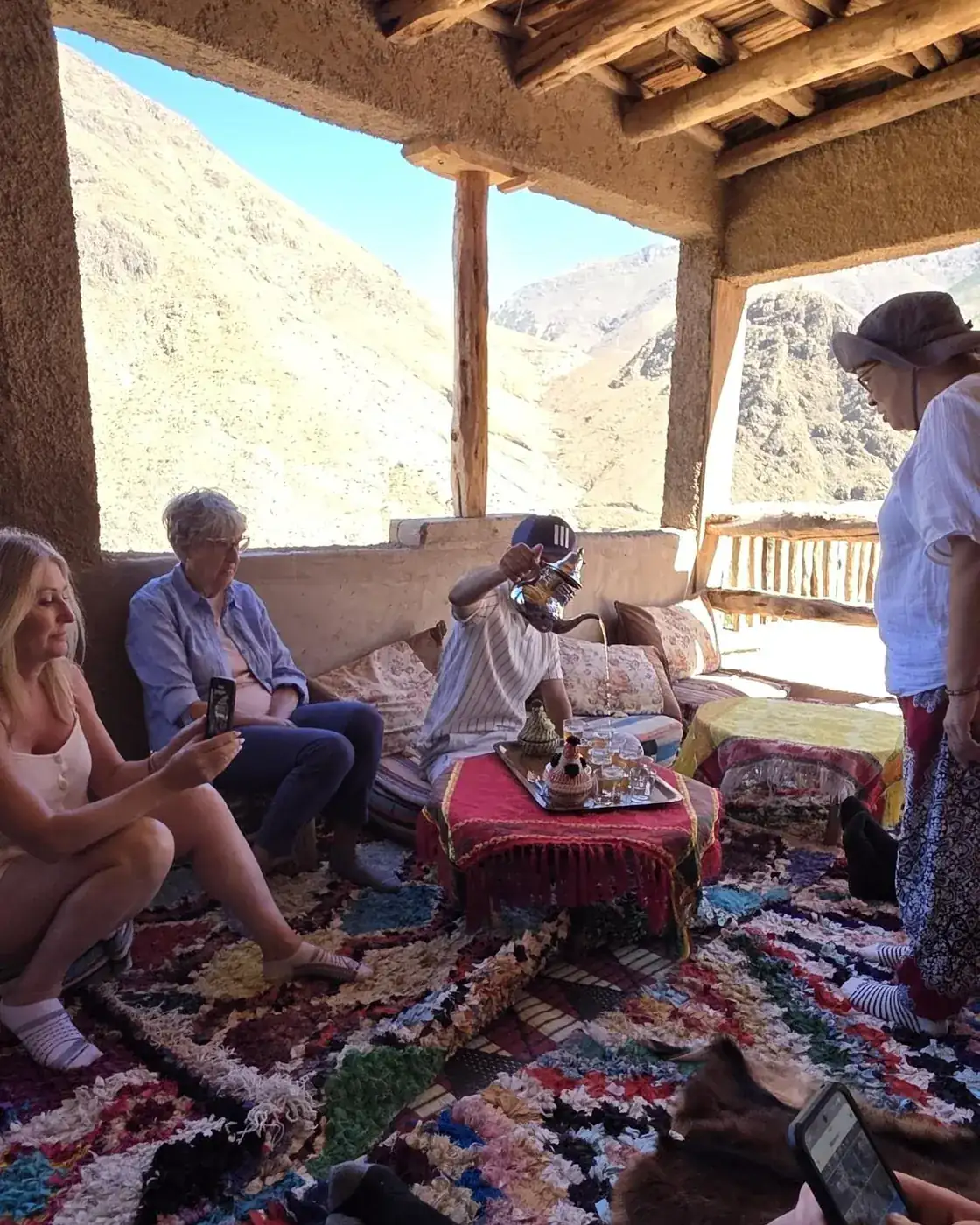
If a family offers mint tea, it's an honor. Accept at least one glass. It's the heart of Moroccan hospitality.
Safety & health
Safety & health
Morocco is a welcoming country. These tips keep things smooth.
- 20
Drink bottled water
Drink bottled or filtered water and avoid ice from unknown places. Peel fruit, and choose busy street-food stalls where food is cooked fresh.
- 21
Beware of "faux guides"
In the medinas, friendly strangers may say a street is "closed" and offer to lead you. Politely decline. A licensed guide (or your own guide) saves time and stress.
- 22
Henna and snake charmers
Agree on a price before anyone paints henna on your hand or puts a snake on your shoulder.
- 23
Take official taxis
Small "petit taxis" in cities should use the meter. Ask for it, or agree on a price before you get in.
- 24
Respect the sun and altitude
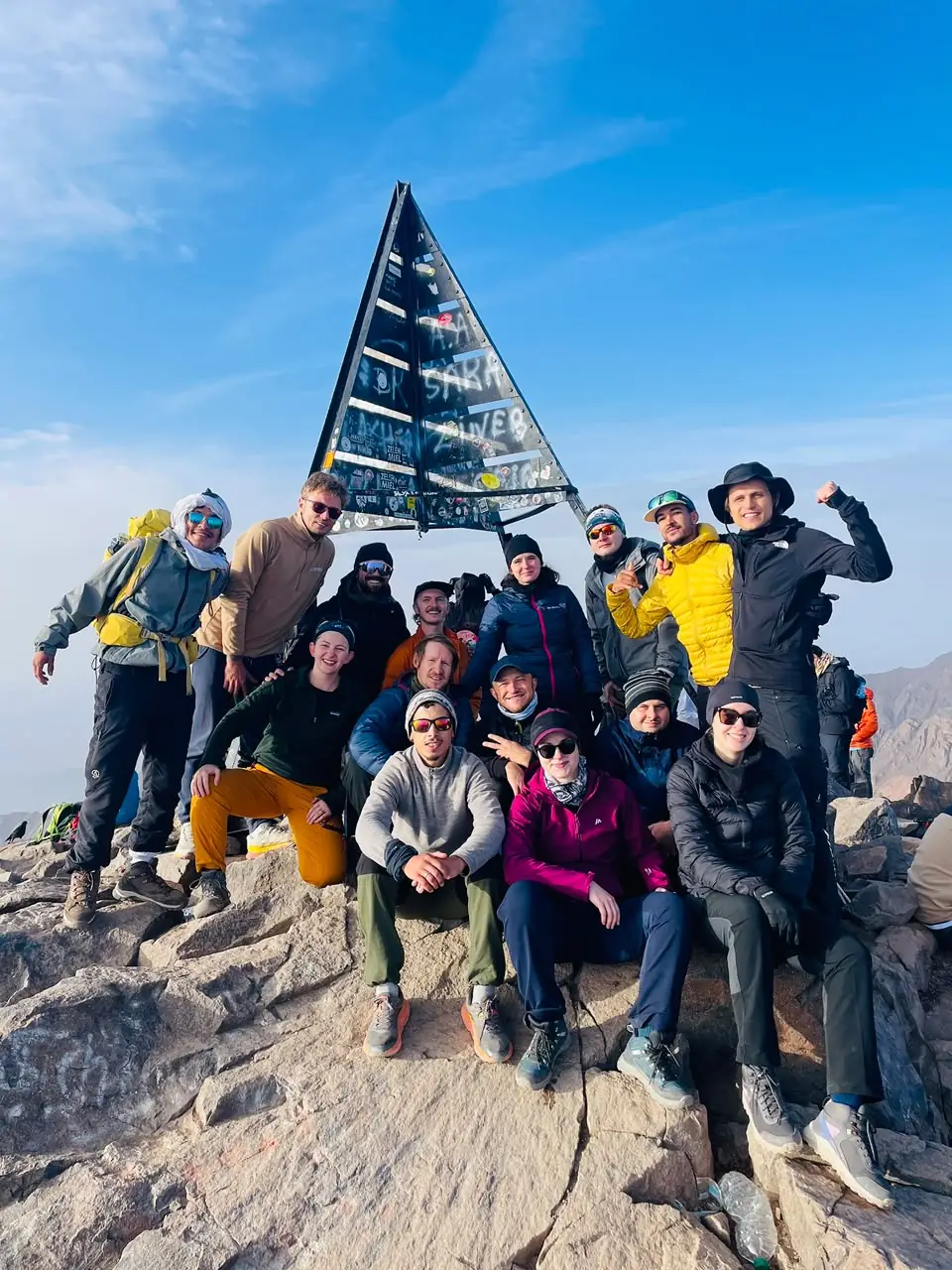
The sun is strong all year: hat, sunscreen and water. On Toubkal (4,167 m) walk slowly, drink a lot and tell your guide if you feel unwell.
- 25
Emergency numbers
Police: 190 from a mobile. The US Consulate General is in Casablanca. Save your guide's WhatsApp number too: we answer day and night during your trip.
- 26
Pharmacies are excellent
Look for the green cross. Pharmacists are well trained, often speak French and English, and can help with small problems.
Phone, internet & power
Phone, internet & power
Staying connected is easy and cheap.
- 27
Get a local SIM or eSIM
Buy a SIM at the airport (Maroc Telecom, Orange or inwi) with lots of data for a few dollars, or use an eSIM. Wi-Fi is common in riads and hotels.
- 28
WhatsApp is king
Everyone in Morocco uses WhatsApp: guides, drivers, riads and restaurants. Install it before you leave.
- 29
Bring a plug adapter
Morocco uses European round-pin plugs (type C/E) and 220 V. Bring an adapter; phones and laptops are fine, but US hair dryers may need a converter.
- 30
Download offline maps
The medinas are a maze and GPS can jump around. Download offline maps, and don't worry about getting lost: it's part of the fun.
Getting around
Getting around
Distances on the map look short. Mountain roads tell a different story.
- 31
Plan realistic drive times
Marrakech to Merzouga is about 9–10 hours by road over the Atlas. Breaking the journey in Ait Ben Haddou or the Dades Gorges makes it a pleasure instead of a marathon.
- 32
Trains between big cities
The Al Boraq high-speed train links Tangier, Rabat and Casablanca, and comfortable trains continue to Marrakech and Fes.
- 33
Think twice before self-driving
Driving is on the right like in the US, but city traffic, mountain roads and police checkpoints can be stressful. A private driver lets you enjoy the views and stop wherever you like.
- 34
Leave time in Marrakech
Arrive with at least one or two nights in Marrakech to recover from jet lag before the desert or the mountains.
What to pack
What to pack
Morocco has every climate in one country.
- 35
Layers, always
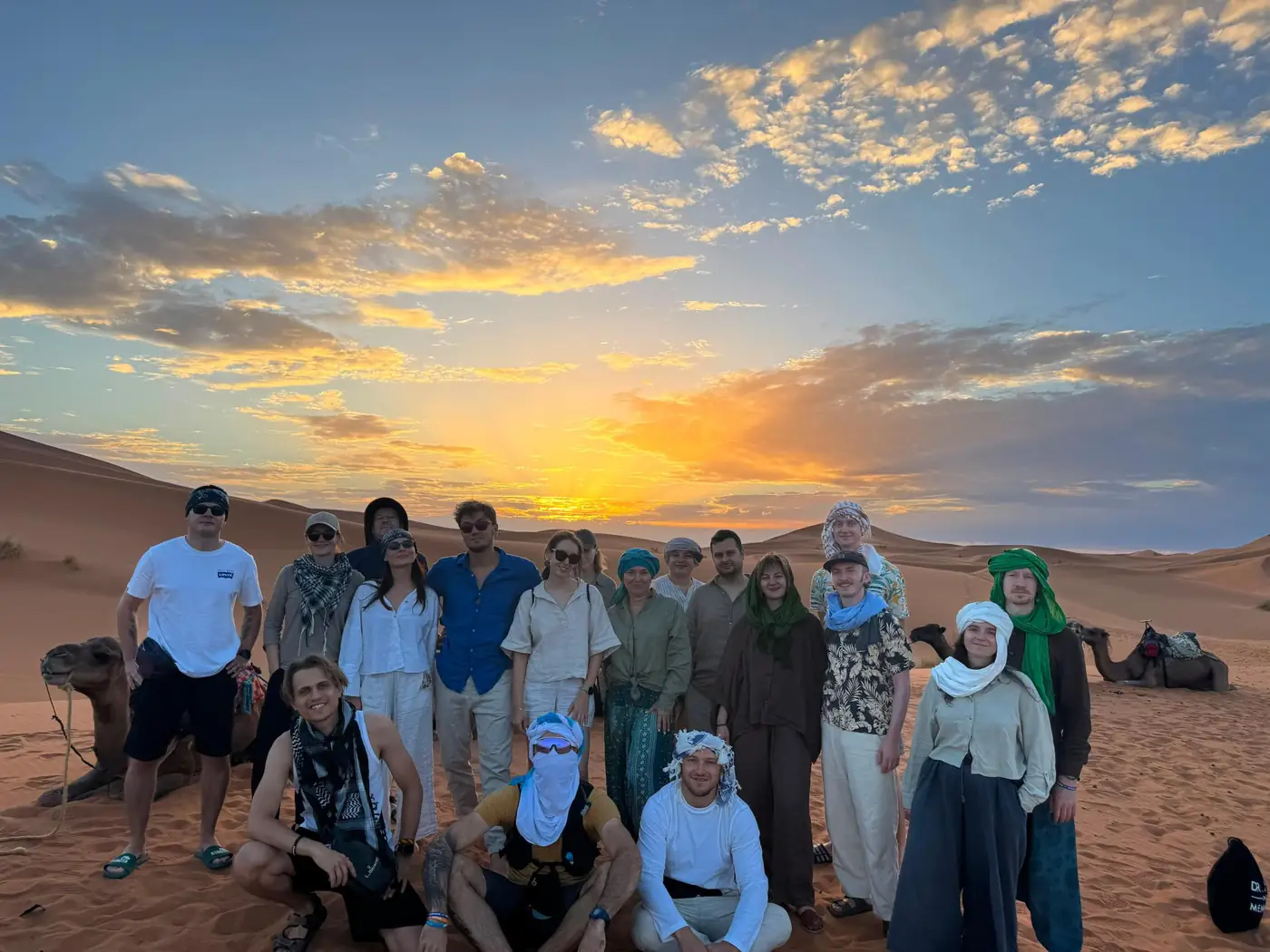
Desert nights and mountain mornings are cold, even after hot days. Pack a warm fleece or light down jacket, all year.
- 36
A scarf for everything
Sun, sand, mosque visits, dust on the road: a big scarf (or a Berber cheche bought in the desert) does it all.
- 37
Good walking shoes
Medina streets are uneven and the Atlas trails are rocky. Comfortable trainers or light hiking shoes are perfect.
- 38
Small daypack and headlamp
For camel rides, treks and the desert camp at night.
- 39
Space in your suitcase
Rugs, lanterns, argan oil, spices, ceramics… almost everyone goes home with more than they came with.
Food & drink
Food & drink
One of the best reasons to come.
- 40
Eat beyond tagine
Try couscous on Friday, harira soup, pastilla, tanjia in Marrakech, fresh fish in Essaouira and Berber omelette in the mountains.
- 41
Vegetarians are easy
Vegetable tagines, couscous, salads, lentils and bread are everywhere. Tell us about allergies or diets and we'll organise it.
- 42
Lunch with a family
The best meal of your trip will probably be in a village home in the Atlas. Ask us to include one.
Plan your trip with locals
We are a family company from the High Atlas. Tell us your dates and dreams, and we'll design a private journey with honest advice at every step.